Negative 26 · The Raw Shark Texts
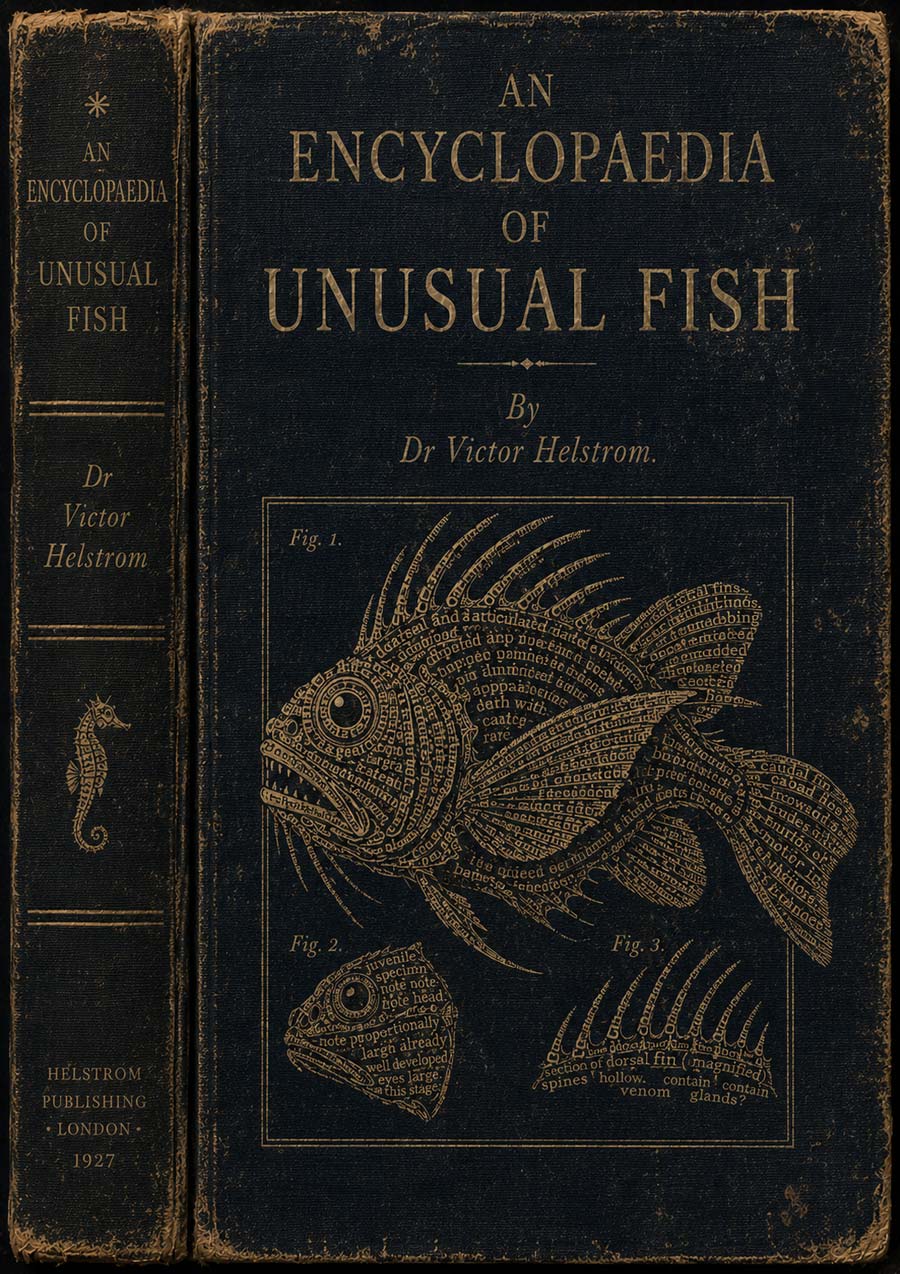
An Encyclopaedia of Unusual Fish
A reader-created reconstruction of Dr Victor Helstrom’s in-world encyclopaedia from The Raw Shark Texts by Steven Hall
Overview
What is the Encyclopaedia of Unusual Fish?
 Click to enlarge
Within The Raw Shark Texts, conceptual fish are creatures of memory, language, culture, interaction and cause/effect. This reconstruction brings together the known fish names, recovered extracts and visual fragments connected with Negative 26.
The completed encyclopaedia should contain 100 entries, but not all have yet been identified. The entries below gather the recovered descriptions, known catalogue names and surviving visual fragments into one reader-created reference.
Book layout
Chapters
Source: The Raw Shark Texts
- The Fish of the Deep Oceans
- The Fish of Scottish Lochs and Other Bleak Localities
- Prehistoric Fish and the Fossils
- The Fish of Mind, Word and Invention
Taxonomy and currents
Notes on taxonomy
Source: The Raw Shark Texts
Conceptual fish / thought fish
General class of creatures living in conceptual waterways. They move through human interaction, thought, memory, language, culture, and cause/effect. Some are small or primitive; others are apex predators.
Conceptual sharks
The predatory subset of conceptual fish. The Ludovician is the main example.
Ludovician
The central conceptual shark. It feeds on human memories and the intrinsic sense of self. It is solitary, territorial, methodical, extremely dangerous, and may pursue one person over years until identity and memory are consumed. Later sources call it the largest and most aggressive conceptual shark, an apex predator, and a mnemonic predator.
Catalogue list
Known entries
Known names and source status for a reconstructed list of entries in the Encyclopaedia. Numbered entries and linked titles jump to the relevant detailed entry below where one is available. Tags reflect where the term was sourced (book = attested in The Raw Shark Texts; undex = listed in the author's index/undex material; recovered = discovered from associated material).
-
Apalasitien
-
Aptiphage
-
Araul Calthonis
-
Recovered from The Raw Shark Texts Facebook Group.
A financial-potential giant that begins in a coin and feeds on perceived value as it circulates.
-
‘Blinking’ Quaric
-
Blue Bonbolian
-
Burgnatell
-
Dream Tip
see also Nightmare Tip
-
Nightmare Tip
-
Fathmic Candiru
-
Flatwold
-
Folocondorius
-
Recovered text/image associated with Eva Signet’s MySpace page; also shared on author Instagram.
A territorial written-word shark that claims a single text and circles through every copy in existence.
-
Fry
Little thought fish. Harmless individually, but dangerous in quantity because larger creatures may follow their trail. They pick at punctuation/old-fashioned letters, especially the long s, and are flushed from tunnels using Middle C.
-
Heletrobe
Also attested on website material.
-
Published in the 22 February edition of The Big Issue in Scotland; also shared on author Instagram.
A pseudo-temporal migration fish whose redshift and blueshift stripes can produce déjà vu and acute future anxiety.
-
Jarhaphish (“Inknose”)
-
Lampropini
-
Ledgerlantern
-
Lewzivian
-
Ludogarian
-
Recovered from Eva Signet’s MySpace page.
-
A powerful mnemonic predator that consumes memory, identity and the intrinsic sense of self.
-
Ludovician, young
Canadian edition only.
-
Ludovician<Metavician
-
Luxogone
-
“Idea lampreys - the conceptual crabs, the jellies, some of the simple fish.”
-
Meglovician
A gigantic extinct relative of the Ludovician. It outsized the Ludovician and may have died out 400–500 years earlier, possibly because printed language diversified away from Latin.
-
Panophageus
shoal queens
-
Psychardius Armourus
-
Image from The Raw Shark Texts; see also author Instagram.
-
Recovered entry; also shared on author Instagram.
A shoal predator of academic philosophical discourse that can strip ideas, statements and thoughts of meaning.
-
Ticking Remora
There have been rumours that they live in clocks and can manipulate time.
-
Vigophage
Detailed entries
Recovered and described entries
These detailed entries from the Encyclopaedia have been extracted from The Raw Shark Texts and other found fragments. The large numbers below the illustrations mark known entry numbers where available; XX, XY, etc, mark detailed descriptions for fish whose Encyclopedia entry number has not yet been determined. Click any image to enlarge it.
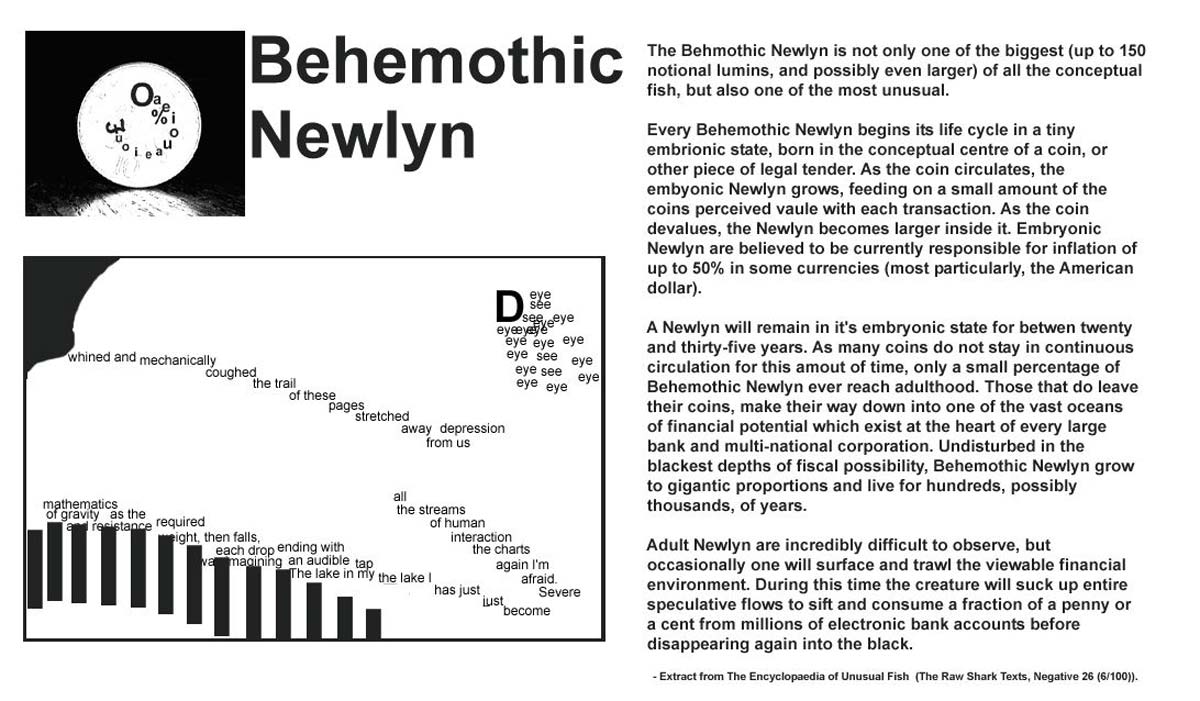
Behemothic Newlyn
Source detail: Recovered from The Raw Shark Texts Facebook Group. Spelling errors retained in case they're relevant.
The Behmothic Newlyn is not only one of the biggest (up to 150 notional lumins, and possibly even larger) of all the conceptual fish, but also one of the most unusual.
Every Behemothic Newlyn begins its life cycle in a tiny embrionic state, born in the conceptual centre of a coin, or other piece of legal tender. As the coin circulates, the embyonic Newlyn grows, feeding on a small amount of the coins perceived vaule with each transaction. As the coin devalues, the Newlyn becomes larger inside it. Embryonic Newlyn are believed to be currently responsible for inflation of up to 50% in some currencies (most particularly, the American dollar).
A Newlyn will remain in it's [sic] embryonic state for betwen [sic] twenty and thirty-five years. As many coins do not stay in continuous circulation for this amout [sic] of time, only a small percentage of Behemothic Newlyn ever reach adulthood. Those that do leave their coins, make their way down into one of the vast oceans of financial potential which exist at the heart of every large bank and multi-national corporation. Undisturbed in the blackest depths of fiscal possibility, Behemothic Newlyn grow to gigantic proportions and live for hundreds, possibly thousands, of years.
Adult Newlyn are incredibly difficult to observe, but occasionally one will surface and trawl the viewable financial environment. During this time the creature will suck up entire speculative flows to sift and consume a fraction of a penny or a cent from millions of electronic bank accounts before disappearing again into the black.
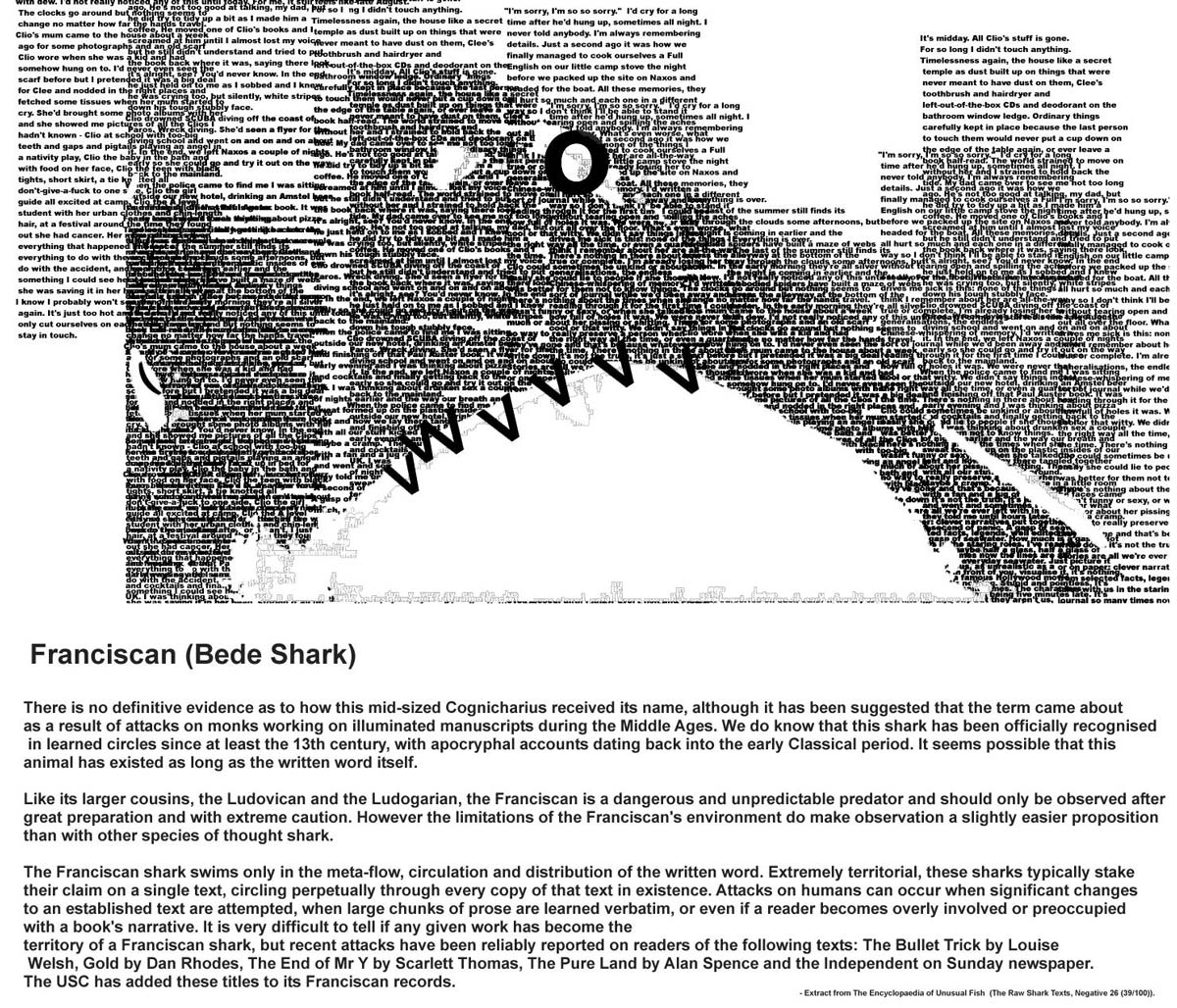
Franciscan (“Bede Shark”)
Source detail: Recovered text/image associated with Eva Signet’s MySpace page. See also: author Instagram post.
There is no definitive evidence as to how this mid-sized Cognicharius received its name, although it has been suggested that the term came about as a result of attacks on monks working on illuminated manuscripts during the Middle Ages. We do know that this shark has been officially recognised in learned circles since at least the 13th century, with apocryphal accounts dating back into the early Classical period. It seem possible that this animal has existed as long as the written word itself.
Like its larger cousins, the Ludovican and the Ludogarian, the Franciscan is a dangerous and unpredictable predator and should only be observed after great preparation and with extreme caution. However the limitations of the Franciscan’s environment do make observation a slightly easier proposition than with other species of thought shark.
The Franciscan shark swims only in the meta-flow, circulation and distribution of the written word. Extremely territorial, these sharks typically stake their claim on a single text, circling perpetually through every copy of that text in existence. Attacks on humans can occur when significant changes to an established text are attempted, when large chunks of prose are learned verbatim, or even if a reader becomes overly involved or preoccupied with a book's narrative, It is very difficult to tell if any given work has become the territory of a Franciscan shark, but recent attacks have been reliably reported on readers of the following texts: The Bullet Trick by Louise Weish, Gold by Dan Rhodes, The End of Mr Y by Scarlett Thomas, The Pure Land by Alan Spence and the Independent on Sunday newspaper.
The USC has added these titles to its Franciscan records.
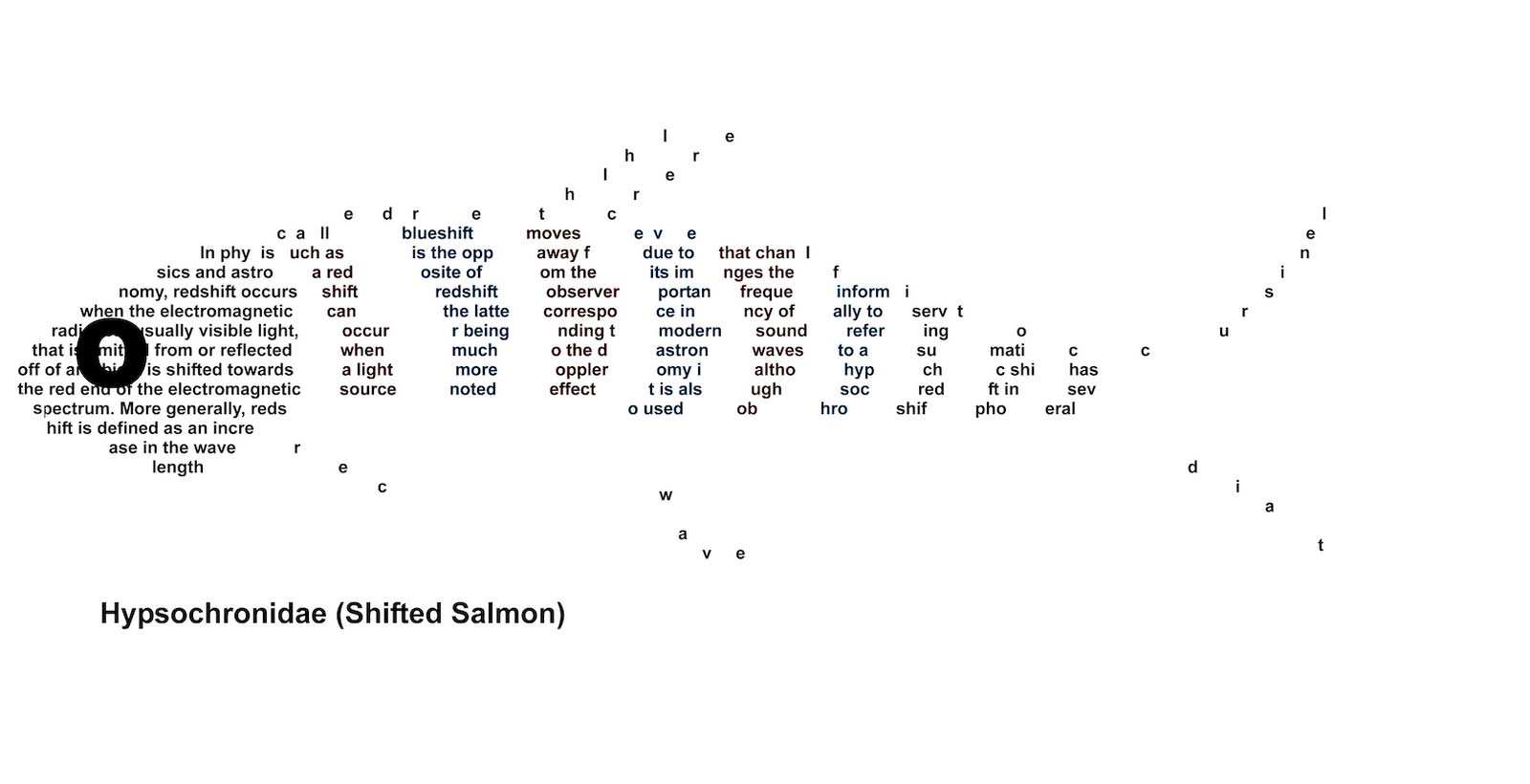
Hypsochronidae (“Shifted Salmon”)
Source detail: Published in the 22 February edition of The Big Issue in Scotland. See also: author Instagram post 1 and post 2.
The Hypsochronidae, more commonly known as the ‘Shifted Salmon’ or ‘Doppler Fish’, is a fairly common, medium-sized sentapiscis.
Adults average at about three notional lumins in length, although larger individuals are occasionally observed. Rather than the size of any one individual however, it is the sheer number of shifted salmon observable during the migration season that mark this animal out for special attention.
Throughout much of the twentieth century, thousands of shifted salmon made their way from the deep oceans of the collective unconscious to breed in the bright streams of debate and human interaction which occured at large conventions/public events around the world. In North America, tens of thousands of shifted salmon were traditionally drawn together to breed in the near constant news commentary and social speculation of Superbowl weekend. UK migrations were often more sporadic, occurring most often around long-running news stories or political scandal during the summer months.
In a dramatic evolution of their behaviour, the early twenty-first century has seen breeding groups of hypsochronidae relocate into the social media space in large numbers, with almost perpetual migrations leading to a dramatic population spike.
Hypsochronidae characteristics: The Shifted salmon’s common name comes from the alternate stripes of redshift and blueshift doppler-logic which line its body as camouflage. The shifted salmon’s redshift stripes are known to cause a strong sense of déjà vu, while the blueshift stripes can bring about acute future anxiety. A ‘flash’ of both stripes at once as the animal swims can therefore be understandably very disorientating and in large shoals the effect can be overwhelming for an observer for several hours after an encounter. Because of this pseudo-temporal effect, there has been suggestion that the shifted salmon actual exists briefly in the past and future as well as the present, but there has never been any evidence for this. There has also been speculation on the fringes of scientific study that the shifted salmon is a distant relative of the Einsteinian Ticking Remora, although as this fish is so rare no real study into this proposition has been achieved.
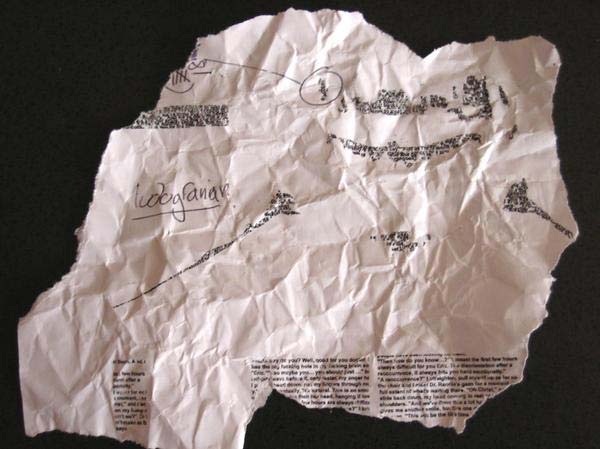
Ludograna
Source detail: Recovered from Eva Signet’s MySpace page.
Recovered fragment associated with the Ludograna material.
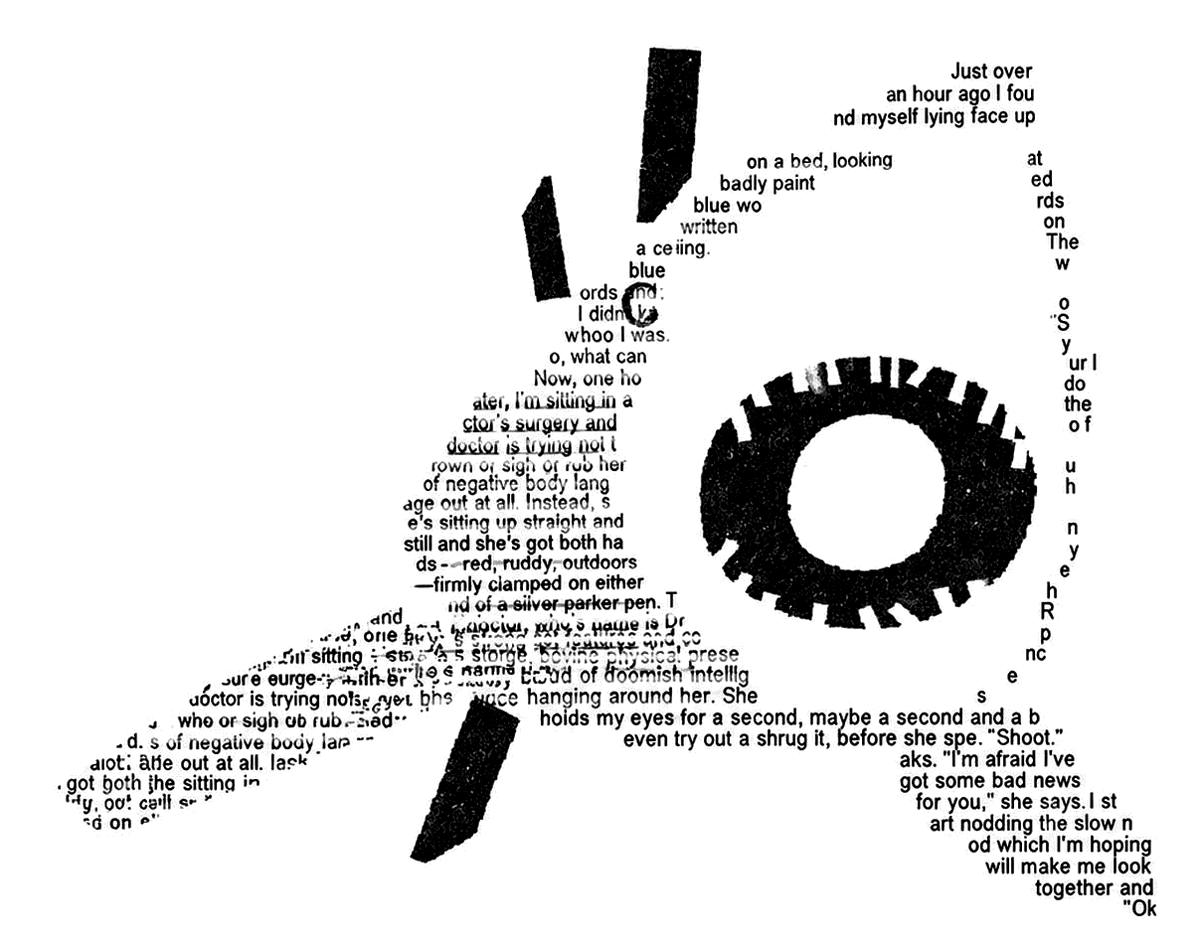
Ludovician
Source detail: Description and image from The Raw Shark Texts.
First officially catalogued for the USC by Capt. St John Lewis in 1839, and named in honour of him by the society, the Ludovician shark has been a cause of myth, speculation and storytelling for over four thousand years (see below). A powerful and persistent mnemonic predator, Ludovicians are to be considered amongst the most dangerous of all sentapiscis and should only be observed after great preparation and with extreme caution.
With a recorded length of over thirty notional lumens from snout to tail tip, the Ludovician is the largest living member of the Cognicharius family, outsized only by the gigantic Meglovician which seems to have become extinct between four and five hundred years ago, possibly due to the western diversification of printed language from a previously prevalent Latin. The Ludovician appears to be more adaptable and, as a result, is more widely distributed than its extinct cousin. Although the animal is solitary and (thankfully) rarely encountered in the field, Ludovician attacks on speakers of over twenty languages have been reliably reported over the past fifty years. This and other research suggests a stable, if not growing population.
Ludovician characteristics: Portentous, impassive to vague to vacant colouration, sepulchral bite radius, regressively swept fins and ubiquitous dorsal meme.
Ludovician myths: It should come as little surprise that this large, dangerous and enigmatic predator should be the focus of much legend and superstition. Perhaps the most engaging of all the myths associated with these animals is the ancient Native American belief that all memories, events and identities consumed by one of the great dream fishes would somehow be reconstructed and eternally sustained inside it. The indigenous oral tradition tells us how the greatest shamans and medicine men would travel to ancestral holy places to pass their souls into the dream fish when they reached old age. These shamans believed that once they had sacrificed themselves, they would join their ancestors and memory-families in eternal vision-worlds recreated from generations of shared knowledge and experience. In effect, each Ludovician shark came to be revered as a self-contained, living afterlife. Name chants once told which of the ancestors had passed into which of the seven greatest dream fish, but these are now understood to be fragmented and lost. Thankfully, this misguided and macabre practice is no longer observed.
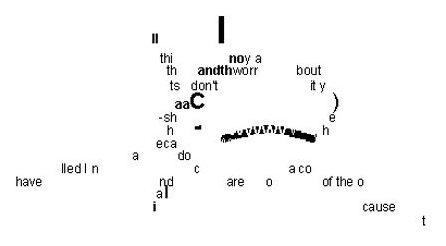
Luxophage
Source detail: Description and image from The Raw Shark Texts.
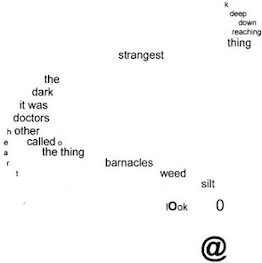
“Idea lampreys - the conceptual crabs, the jellies, some of the simple fish.”
 Click to enlarge
XY
Click to enlarge
XYDetailed description from The Raw Shark Texts. XY placeholder reflects no confirmed entry number.
Prehistoric armoured fish
Source detail: Image from The Raw Shark Texts. See also: author Instagram post 1 and post 2.
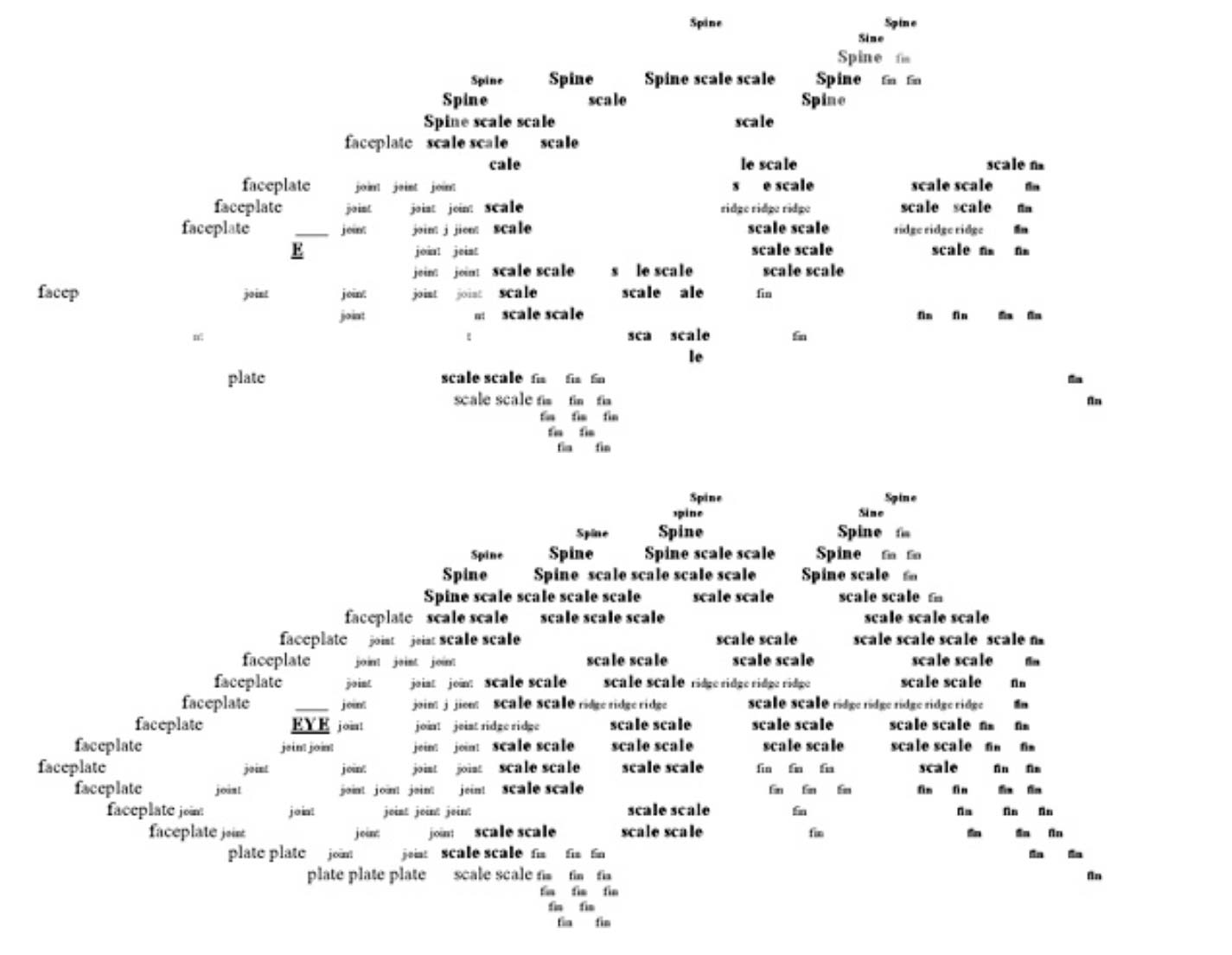
A book-sourced fish image associated with the prehistoric fish strand of the encyclopaedia material.
Serrasalmerrida (“Deconstructive Piranhas”)
Source detail: Recovered entry. See also: author Instagram post 1 and post 2.
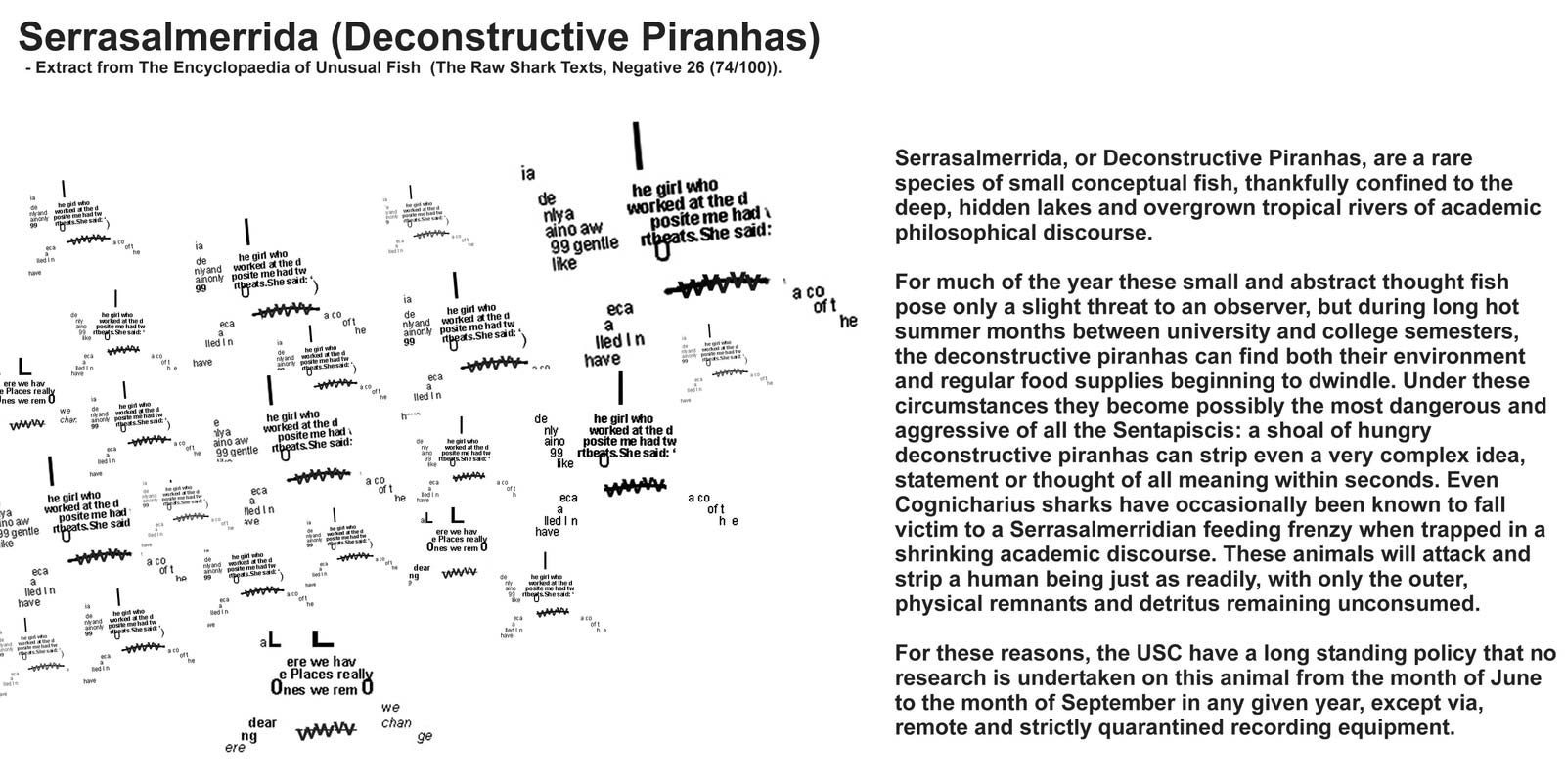
Serrasalmerrida, or Deconstructive Piranhas, are a rare species of small conceptual fish, thankfully confined to the deep, hidden lakes and overgrown tropical rivers of academic philosophical discourse.
For much of the year these small and abstract thought fish pose only a slight threat to an observer, but during long hot summer months between university and college semesters, the deconstructive piranhas can find both their environment and regular food supplies beginning to dwindle. Under these circumstances they become possibly the most dangerous and aggressive of all the Sentapiscis: a shoal of hungry deconstructive piranhas can strip even a very complex idea, statement or thought of all meaning within seconds. Even Cognicharius sharks have occasionally been known to fall victim to a Serrasalmerridian feeding frenzy when trapped in a shrinking academic discourse. These animals will attack and strip a human being just as readily, with only the outer, physical remnants and detritus remaining unconsumed.
For these reasons, the USC have a long-standing policy that no research is undertaken on this animal from the month of June to the month of September in any given year, except via, remote and strictly quarantined recording equipment.
Reader note
Thoughts on the Naming System
The fish names in the Encyclopaedia seem to work on at least two levels. On the surface, they imitate the language of natural history: Latinised species names, taxonomic endings, family groupings, feeding behaviours, juveniles, extinct relatives, parasites, shoals, and predators. But underneath that, they may also form a kind of bestiary of philosophical positions: swimming embodiments of textual theory, memory, perception, light, absence, language, and selfhood.
The clearest clue may come from the Ludovician itself. “Ludovician” looks like a grand pseudo-Latin species name, but it also points intriguingly toward the “Lewisian theory of holes” coined after David and Stephanie Lewis’s philosophical dialogue “Holes”, published in 1970, which debates whether holes can be said to exist even though they are made of absence rather than matter. That neatly fits The Raw Shark Texts: a novel full of gaps, negatives, missing chapters, erased selves, conceptual predators, and things that may exist precisely because something else is missing.
This may also cast Lewzivian in a new light. Read aloud, it sounds very close to Lewisian, suggesting another possible David Lewis connection. Lewis is associated with possible worlds, counterfactuals, identity, and strange metaphysical commitments - the philosophical waters in which The Raw Shark Texts likes to hunt. If the Ludovician is a conceptual shark of holes and absences, the Lewzivian may belong to the same deep-water family of possible worlds and alternate selves.
The related entries — Ludogarian, Ludograna, Meglovician, and Ludovician < Metavician — make the whole Ludovician branch feel evolutionary as well as philosophical. “Ludo-” also suggests play or games, which is appropriate for a novel whose missing chapters, ARG fragments, indexes, and documents operate like a puzzle system. The Meglovician, described as a gigantic extinct relative of the Ludovician that may have died out as printed language diversified away from Latin, is a monster whose habitat may have depended on a shared textual sea. Once language fragmented into vernacular print cultures, perhaps the great Latin predator lost its hunting grounds.
Placing a Black Box near the Ludovician/Metavician material is also suggestive. A black box is something whose inner workings are hidden: we can observe the inputs and outputs, but not the mechanism inside. That feels like another philosophical creature of absence — not a hole exactly, but a sealed space where meaning, memory, or identity is processed invisibly. In a Raw Shark context, the black box might be less a machine than a conceptual stomach: something that takes in experience.
Other names seem to play more directly with feeding behaviours. Aptiphage, Luxophage, Panophageus, and Vigophage all use the “-phage” pattern, from the Greek for eating or consuming. A Luxophage would be a light-eater; Panophageus eat everything; Vigophage perhaps an eater of vigour, wakefulness, or alertness.
The light-based names form one little cluster. Luxophage eats light; Luxogone may be light-born, light-gone, or simply a punning creature of illumination and disappearance; Lampropini suggests brightness or shining; and Ledgerlantern sounds like something that illuminates records, accounts, lists, or archives. These could be creatures of reading itself.
A second cluster seems to belong to books, ink, and scholarship. Folocondorius may hide “folio” inside a grand birdlike or taxonomic shape, suggesting a page-creature or book-scavenger. Jarhaphish, glossed as “Inknose,” clearly belongs to writing, print, and possibly baited textual trails. Ledgerlantern again feels archival: a thing that lives among records. The “Bede” shark may be a nod to Bede Rundle, an Oxford analytic philosopher whose work often concerned language, grammar and meaning. The name also carries a monastic echo through the Venerable Bede, though Bede himself was Benedictine rather than Franciscan.
Then there is Serrasalmerrida (‘Deconstructive Piranhas’), which may be the most blatant philosophical pun in the list. The name looks like a collision between Serrasalmidae, the piranha family, and Derrida, the philosopher most associated with deconstruction. Derrida’s work is deeply concerned with textual instability, difference, and the way meaning undoes itself from within.
Several names borrow from real aquatic life and translate it into conceptual behaviour. Fathmic Candiru suggests depth and understanding — to fathom something — combined with the parasitic reputation of the real candiru catfish (it's infamous for the myth claiming it can swim up a human urethra if they urinate in the water). Ticking Remora turns the remora, a suckerfish, into a time-parasite. Hypsochronidae (‘Shifted Salmon’ / ‘Doppler Fish’) sound like a family of displaced, frequency-shifted, or time-slipped fish. Fry and shoal queens give the system ordinary biological life stages and social structure, while the “idea lampreys,” “conceptual crabs,” “jellies,” and “simple fish” suggest the lower levels of the conceptual food chain.
What have I missed here? Please share your thoughts in the comments and reassure me I'm not the only word-obsessive in these parts.
Acknowledgements
All concepts and original descriptions from Dr Victor Helstrom’s Encyclopaedia of Unusual Fish remain the property of Steven Hall, author of The Raw Shark Texts. This page is a reader-created, non-commercial fan reconstruction intended to document, discuss and celebrate its scattered fragments. The reconstruction builds on work from many before me - and I hope will benefit from future discoveries too! I especially want to call out TheRawSharkTexts Reddit group, including members We Went Blues and No_Jaguar_2570, and others who have contributed their findings to the Sharkive.