Mountweazels, Paper Towns and Copycat Traps
Last updated by Daisy on . (First published .)
Mountweazels, Paper Towns and other Copycat Traps
MOUNTWEAZELS
Somewhere in the back alleys of publishing history lives Lillian Virginia Mountweazel: fountain designer, photographer, author of Flags Up!, but – more importantly – a woman who never existed.
Mountweazel appeared as a fictitious entry in the 1975 New Columbia Encyclopedia. She was not a forgotten artist or a misfiled minor celebrity, but a deliberate invention: a tiny trap laid by the editors to catch anyone copying their reference work without permission. The term “Mountweazel” has since come to mean any false entry deliberately inserted into a reference work as a copyright trap.

PAPER TOWNS
Mapmakers have their own version: the “paper town”. These are imaginary settlements, streets or landscape features added to maps so that plagiarism can be detected. The most famous is Agloe, New York, a fictional hamlet reportedly created in 1929 by mapmakers Otto G. Lindberg and Ernest Alpers as an anagram of their initials. Agloe was intended as a copyright trap, but fiction became truth when people using those maps went looking for Agloe, and the name attached itself to the fictional location – an Agloe General Store opened there, and later mapmakers were able to argue that Agloe was no longer merely a copied error but an actual named place.
A more recent example popped up in 2009 when reporters tried to visit Argleton, a Lancashire “village” that appeared on Google Maps and Google Earth despite apparently being nothing more than empty fields near the real village of Aughton.

John Green brought this idea to a much wider audience in his 2008 novel Paper Towns, in which Agloe becomes a key destination in his mystery-like coming-of-age story. The novel is not really “about” cartographic copyright traps in a technical sense, but it cleverly uses the idea of a fake place as a metaphor for the imaginary versions of people we carry around in our heads.
GHOST WORDS
The same family of ideas appears under other names. In German, a fake encyclopedia entry may be called a Nihilartikel, literally a “nothing article.” In dictionaries, invented words are sometimes called ghost words or trap words. The most famous case is esquivalience, a word the New Oxford American Dictionary defined as “the wilful avoidance of one’s official responsibilities” (which is hilarious in context). It was invented for the dictionary’s first edition by editor Christine Lindberg, complete with a fabricated etymology tracing it to French. For years nobody noticed. Then, in 2005, a New Yorker journalist went hunting through the dictionary’s more obscure entries and, with the help of several lexicographers, zeroed in on the word as a likely fake. Editor-in-chief Erin McKean confirmed it, and also said the trap had already caught something: “esquivalience” had turned up, uncredited, on Dictionary.com.
The same principle appears outside books and maps, too. A canary trap is when you give slightly different versions of a document to different people, so that if one version leaks, the source can be identified (in spy circles this is also sometimes called a barium meal test). In cybersecurity, honeypots are decoy systems or files designed to attract intruders, while honeytokens are fake-but-trackable pieces of data – like dummy credentials, email addresses or documents – that trigger an alert when used. Email marketers and anti-spam teams also use spamtraps: addresses that look real but are not used by real people, so mail sent to them can reveal harvesting, scraping or poor list hygiene. Different fields, same basic trick.

FAUX LIVRES
As a book collector, I can spend years making the painstaking comparisons that bring the illustrated bibliographies I share here to life: finding rare editions, tracking down binding information, issue points, ISBNs and obscure reprint trivia. Many generous readers also contribute discoveries, corrections, photographs and hard-won knowledge from their own shelves.
But of course, once it’s public, nothing stops someone from copying it wholesale and presenting it as their own original work – and sometimes they send automated scrapers through this site so aggressively that they place a real strain on the servers and slow things down for genuine visitors. So I have one or two Mountweazels or ‘Faux Livres’ of my own tucked into booklists here and there on the site: they are very obviously fake books to a reader browsing in good faith, but quite useful when following up with scrapers…
Book recomendations
It’s me, so you know of couse I’m going to include a list of books for you to read if you like this sort of thing!
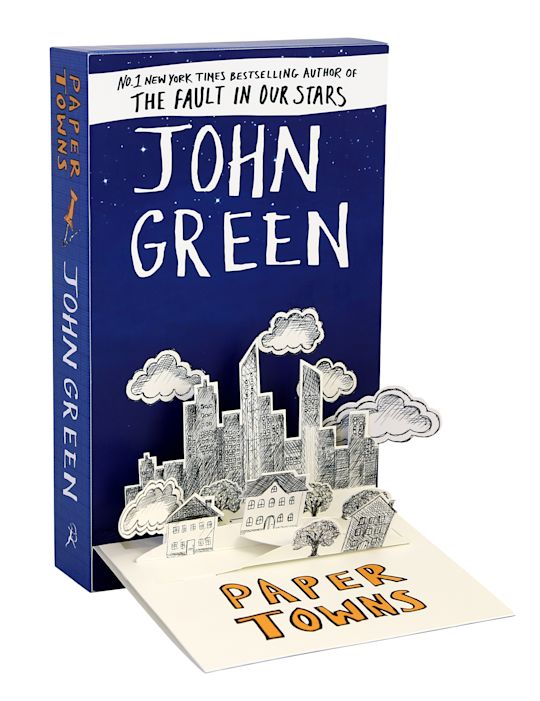
Paper Towns - John Green
Dutton Books • 2008 • Fiction / Mystery
As mentioned above, this is an obvious place to start: a young adult mystery built around Agloe, New York, the famous paper town – used as both plot device and metaphor. It is part road trip, part puzzle, and mostly a meditation on projection and longing.
This book is quite popular so there are plenty of editions around, but I rather like the 2015 Bloomsbury edition I’ve linked below which has a pop-up paper town on the cover! ISBN 9780141354972.
➤ Find it at Amazon | Waterstones | Blackwells | Abes | eBay
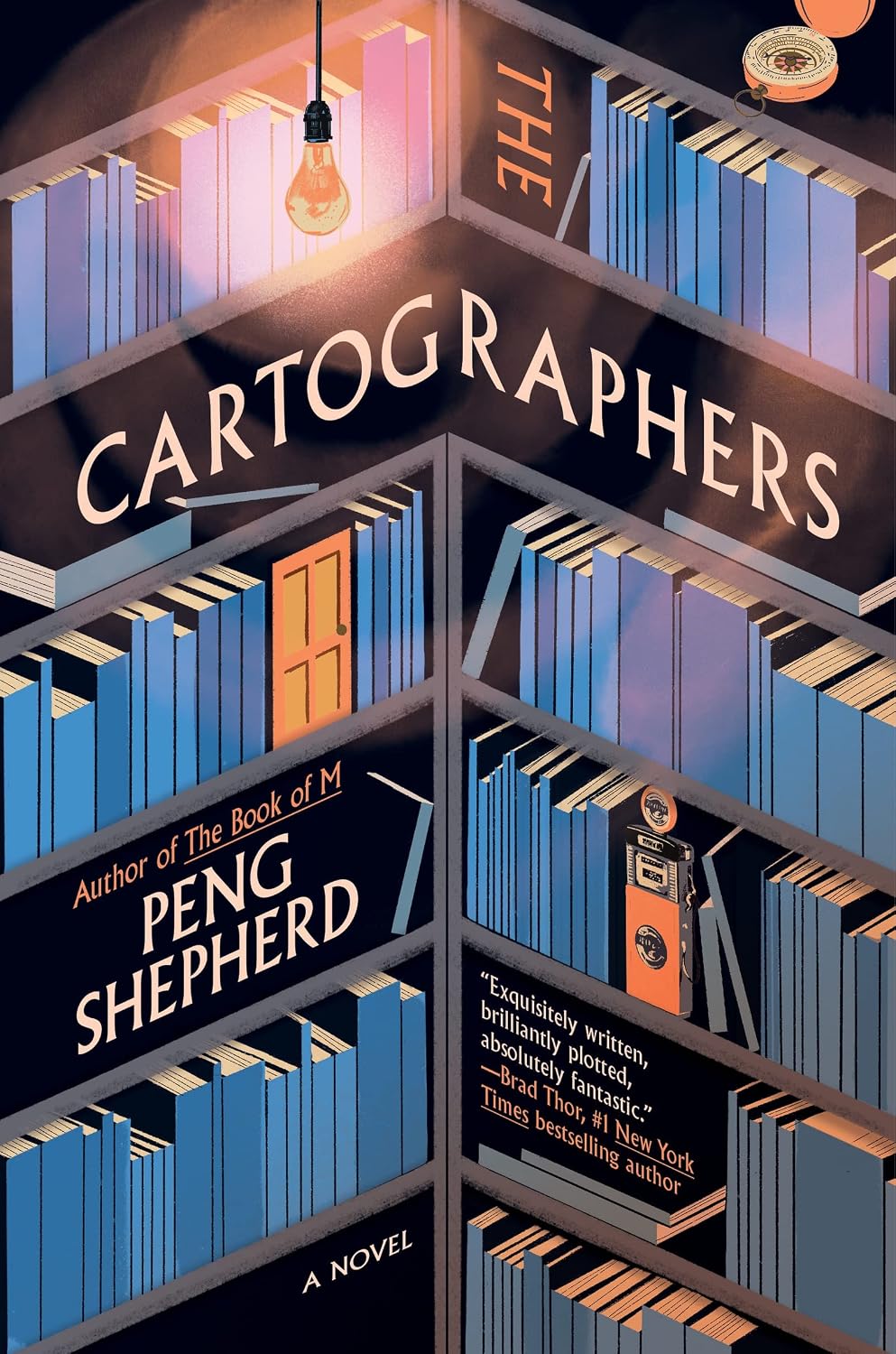
The Cartographers - Peng Shepherd
William Morrow/Orion • 2022 • Fiction / Mystery
A literary mystery-thriller about maps, family secrets and impossible geography. Agloe appears in this one too.
Paperback edition William Morrow US, 9780062910707; Orion UK 9781398705449
➤ Find US ed at Amazon | B&N | Blackwells | Abes | eBay
➤ Find UK ed at Amazon | Waterstones | Blackwells | Abes | eBay
Goldsboro also released a limited edition of this title (1500 copies) with sprayed page edges.
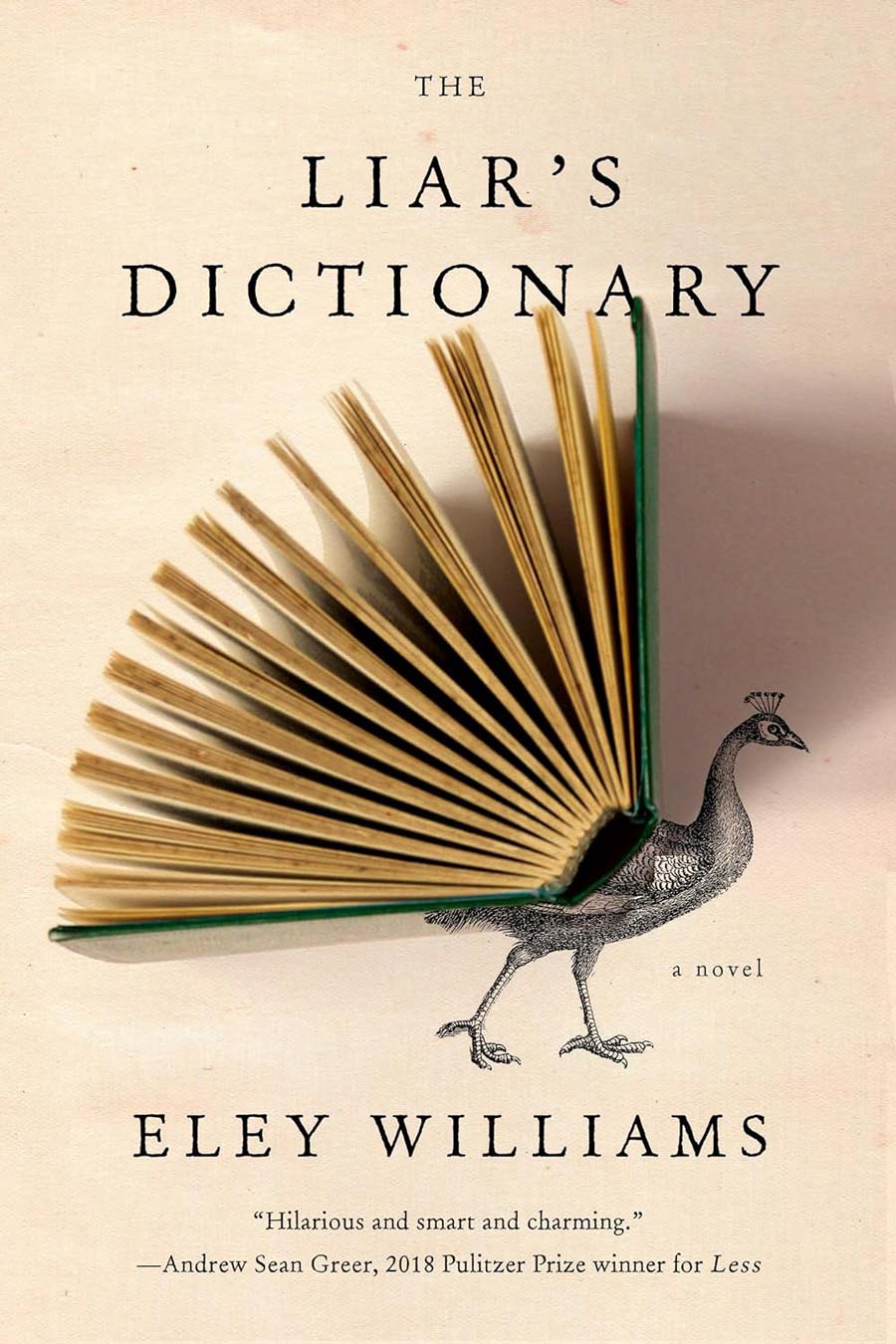
The Liar’s Dictionary - Eley Williams
Doubleday/William Heinemann • 2020 • Fiction
A directly Mountweazel-ish novel (and ideal for word lovers). The plot involves a dictionary, its history, and the hunt for deliberately invented entries hidden inside it.
Paperback edition Doubleday US, 9780062910707; Orion UK 9781398705449
➤ Find US ed at Amazon | B&N | Blackwells | Abes | eBay
➤ Find UK ed at Amazon | Waterstones | Blackwells | Abes | eBay
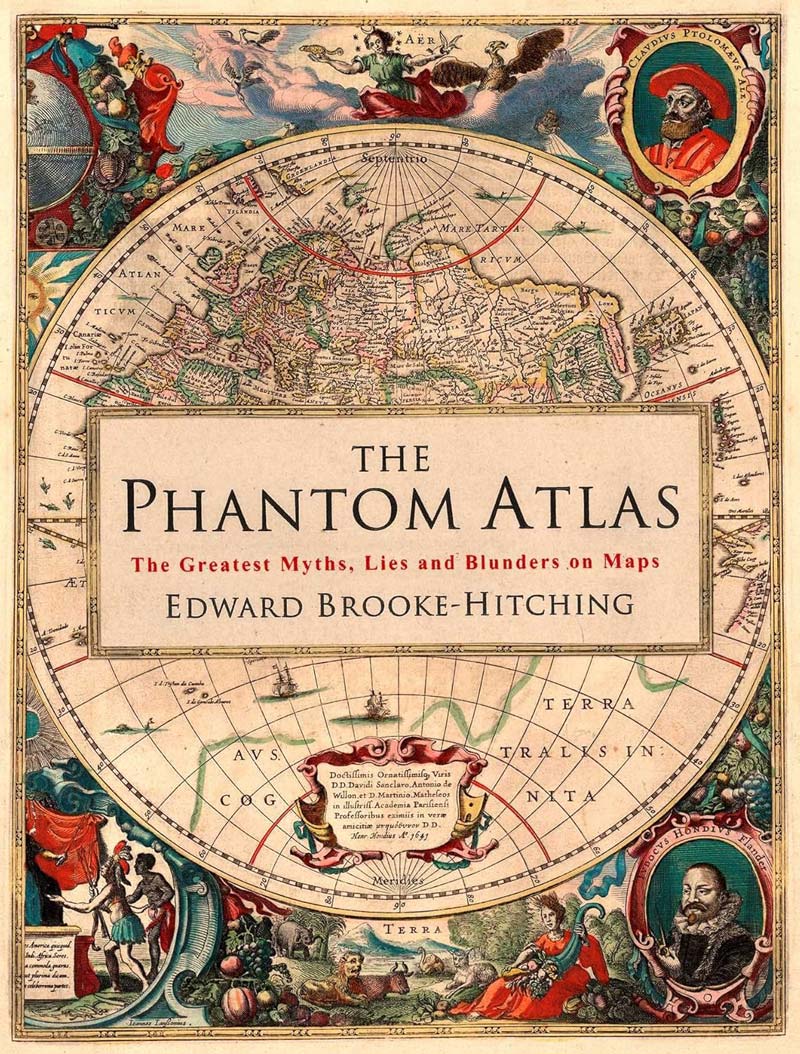
The Phantom Atlas - Edward Brooke-Hitching
A beautifully illustrated oversized tome about places that appeared on old maps but did not really exist: phantom islands, imagined mountains, mythical civilisations and other cartographic mistakes or marvels. It is less about copyright traps than about the long, strange history of mapping the world as people imagined it to be.
US: Simon & Schuster (2016), 9781471159459. US: Chronicle Books (2018), 9781452168401.
➤ Find US ed at Amazon | B&N | Blackwells | Abes | eBay
➤ Find UK ed at Amazon | Waterstones | Blackwells | Abes | eBay
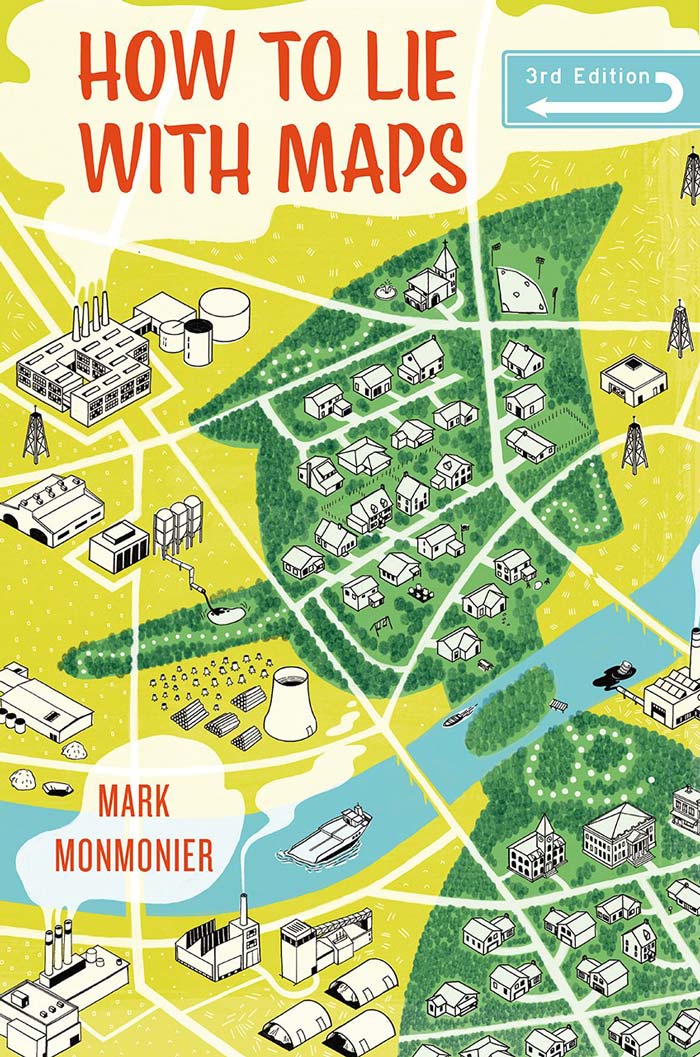
How to Lie with Maps - Mark Monmonier
University of Chicago Press • 1991 • Non-fiction
A classic for anyone interested in the fact that maps are never neutral. It is not specifically about paper towns, but it is one of the best-known books on how maps can distort, simplify, persuade and mislead.
University of Chicago Press (2018, 3rd ed, paperback), 9780226435923.
➤ Find it at Amazon | B&N | Waterstones | Blackwells | Abes | eBay



0 Comments